swivel creative
What is Graphic Recording?
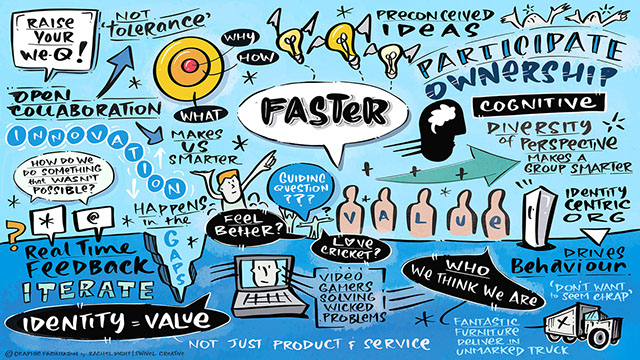
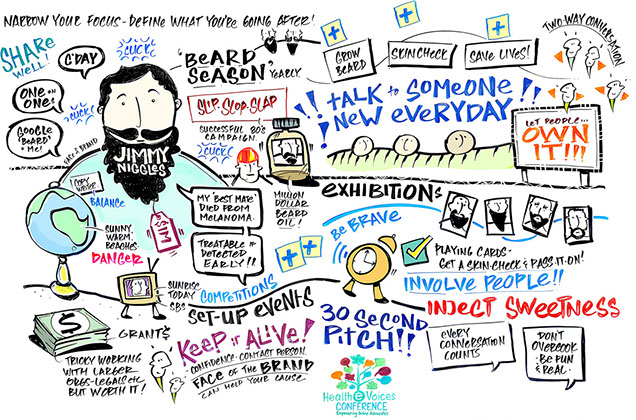
Graphic recording is the live visual capture
of conversations, presentations and group discussions, transforming them into dynamic visual stories using words, illustrations,
icons, metaphors and visual hierarchy.
How Graphic Recording Works
Working alongside presenters, facilitators, keynote speakers and event participants,
a graphic recorder actively listens for
ideas, connections and emerging
themes, synthesising information
as conversations unfold.
Key insights and relationships are woven
into a visual story, making complex information easier to understand,
navigate and remember. As the visual develops, participants can see how ideas connect, making it easier to follow the conversation and see the bigger picture.
The result is more than a visual summary.
It is a living visual record that helps people deepen their understanding, revisit conversations and build on ideas
long after the event.
> Graphic recording in action
Making
Ideas Visible
A speaker shares an idea. Someone in
the audience builds on it. A question
sparks a new perspective. Across the
room, individual contributions begin connecting in unexpected ways.
What might remain a collection of notes
and observations gradually becomes something larger. A visual story begins
to take shape.
This is graphic recording in action.
Turning Complexity into Clarity
Every organisation faces complexity.
Strategic priorities compete for attention. Teams bring different perspectives. Stakeholders bring different goals.
Important decisions often involve
multiple layers of information.
The challenge is not complexity itself.
The challenge is making sense of it.
Graphic recording creates a shared visual reference that helps people navigate complexity together. Ideas that feel abstract become tangible, information becomes
easier to absorb and conversations
become easier to follow.
When people can see complexity, they are better equipped to understand it.
Uncovering
What Matters
When ideas are brought together visually, patterns become easier to recognise. Individual contributions gain new meaning
as relationships between ideas emerge.
Themes begin to stand out.
Understanding deepens. What
seemed like separate conversations
begins to reveal the bigger picture.
Graphic recording helps people step back from the detail, connect the dots and
focus on what matters most.
Why Graphic Recording?
People naturally respond to visual information. When ideas become visible,
they become easier to understand,
remember and share.
Graphic recording creates a visual
feedback loop that helps participants
absorb information, reflect on emerging
ideas and stay connected to the
conversation as it evolves.
It also creates shared understanding
by providing a dynamic visual anchor
that helps groups build alignment
throughout the conversation.
Graphic recording is often used in combination with graphic facilitation in workshops, conferences and strategic planning sessions to support engagement, understanding and collaboration.
Where is Graphic Recording Used?
Graphic recording supports a wide range of conversations and collaborative processes
across events, conferences, large-scale summits and international forums.
_____________________________________________________
Conferences and Events
Capture keynote presentations, panel discussions and audience insights in real
time, creating a living visual record that engages audiences and brings ideas together.
_____________________________________________________
Workshops
Help participants explore ideas and
build a shared understanding throughout collaborative conversations.
_____________________________________________________
Strategic Planning Sessions
Bring complex conversations into a shared visual space, helping teams see priorities, opportunities and future directions.
_____________________________________________________
Organisational Change
Create clarity during periods of transition
by helping people understand priorities, challenges and key messages.
_____________________________________________________
Community Engagement
Capture diverse perspectives in a way that
is inclusive, transparent and accessible
to all participants.
The Value of
Graphic Recording
By helping people see ideas, themes and connections as they emerge, graphic recording engages audiences, creates
clarity and builds shared meaning.
Throughout the event, the live visuals
become an evolving reference point,
helping participants follow the conversation, reflect on new perspectives and see
how ideas connect.
The completed visuals become lasting records that people can revisit, share and build on.
Graphic Recording FAQs
> What is graphic recording?Graphic recording is the live visual capture
of conversations, presentations and group discussions. Using words, illustrations and visual hierarchy, a graphic recorder transforms ideas
into a visual story that helps people understand, remember and engage with information.> What is the difference between
graphic recording and graphic facilitation?Graphic recording visualises conversations as
they happen, helping audiences engage with ideas, make connections and see the bigger picture as it emerges. Graphic facilitation
actively supports the thinking process, helping participants explore ideas, solve problems
and make decisions together. Simply put,
graphic recording helps make ideas visible, while
graphic facilitation helps make thinking visible.> Do participants see the graphic recording live?Graphic recording is created live as conversations unfold, allowing participants to watch the visual story take shape in real time. This creates a visual feedback loop that helps people stay engaged, reflect on emerging ideas and see connections as they develop. As the session evolves, the visual story becomes
a focal point for the conversation, creating
a living visual record that helps participants connect ideas, revisit key themes and engage more deeply with the discussion.> Why is graphic recording effective?People naturally respond to visual information. When ideas are made visible, they become
easier to understand, discuss and remember. Graphic recording helps people connect the
dots, build shared understanding and
uncover what matters most.> Where is graphic recording used?From conferences and events to large-scale summits and community engagement programs, graphic recording helps people connect ideas, navigate complex conversations and build shared understanding.> Can graphic recording be used for online
and hybrid events?Graphic recording can be delivered in person, virtually or as part of a hybrid event. Digital graphic recording allows participants to watch the visual story unfold in real time, helping people stay connected to the conversation wherever they are.> What happens before the event?Every graphic recording project begins with a conversation. We take the time to understand your event, audience, objectives and key themes to tailor a visual experience that reflects what matters most. Depending on the project, this
may also include reviewing presentations, workshop material and background information.> What happens after the event?After the event, you'll receive high-resolution digital files of the completed graphic recordings. If created on large-scale boards, the original artworks remain yours to keep and display.
The final visual assets are often used in reports, presentations, planning, communications and social media, helping the conversation live on long after the event.> How much does graphic recording cost?Graphic recording is priced according to
the scale and requirements of each event. Factors such as duration, location, travel, format, complexity and deliverables all influence the final cost. Because every event
is different, pricing is tailored to the scope
and requirements of each project.
Bringing Ideas to Life
From conferences and large-scale summits to community engagement and organisational change initiatives, graphic recording helps people see ideas take shape in real time.
By creating a shared visual reference,
graphic recording captures key insights, reveals emerging themes and helps
audiences engage with complex ideas.
Swivel Creative works across Sydney and beyond, helping organisations engage audiences and make ideas visible.
> view graphic recording gallery > Let's chat about your event

SWIVEL CREATIVE | RESOURCE
> View graphic recording gallery